
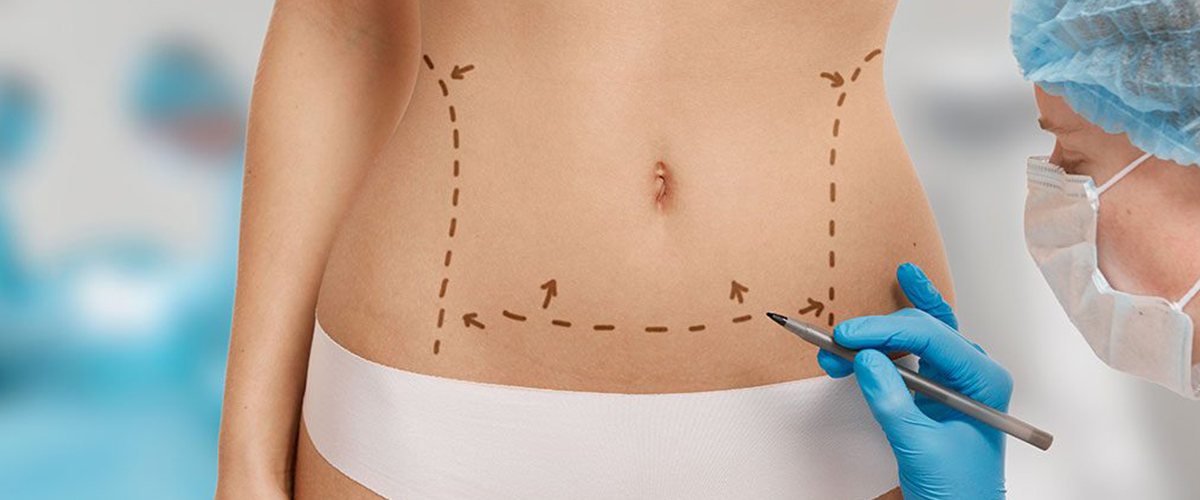
Tummy Tuck (Abdominoplasty)
After significant weight gain and loss, hormonal changes or pregnancy, the abdomen may develop excess fat, sagging skin, stretch marks and weakened abdominal muscles. In these cases, a tummy tuck may be considered.
People with sagging abdominal skin and lax abdominal muscles that do not improve with an appropriate diet and exercise are particularly suitable candidates for a tummy tuck. Abdominoplasty should be seen as a body-contouring operation for the abdomen rather than a weight-loss procedure.
If the patient is overweight, it is recommended that they lose weight and reach their ideal weight before deciding on a tummy tuck. Because the abdominal skin is also thicker in overweight patients, it is not easy to achieve results as good as in patients of normal weight. For this reason, diet and exercise are recommended first. Patients who come to us for sagging skin after losing weight through diet and exercise are among the most suitable candidates.
How is the operation performed?
When the connective tissue between the muscles of the front abdominal wall weakens and tears, the muscles separate. Under pressure from the internal organs, the abdomen appears to bulge outwards and sag. In a tummy tuck, the abdominal muscles are tightened, the front abdominal wall is narrowed, and excess fat and skin are removed. The position of a navel that has dropped downwards can also be changed. Although a tummy tuck does not completely remove stretch marks on the abdomen, it improves most of them.
Depending on the deformity of the abdomen, the operation is performed as a full or mini tummy tuck. A full abdominoplasty is considered when there is marked sagging and fat in the abdomen and advanced separation of the abdominal muscles. If the fat and sagging are limited to the area below the navel, a mini abdominoplasty is considered. If the navel is to be repositioned, there will be scars around the navel and within the underwear line.
Liposuction is usually added to the tummy tuck, which helps achieve a better appearance.
How long does the operation take?
A tummy tuck takes an average of 2–4 hours. Depending on the patient’s condition, they are discharged after 1 or 2 days in hospital.
Can complications occur after surgery?
After a tummy tuck, wound healing problems may occur, particularly in smokers, patients with diabetes, those with other systemic diseases and patients with various wound-healing problems.
What should I pay attention to after surgery?
During the operation, drains are placed in the surgical area to prevent blood and fluid (known as seroma) from collecting inside; they are removed after 1–4 days. For the first few days, painkillers help reduce pain. As the days go by, the pain eases and the patient begins to feel better.
Especially for the first few days, patients are advised to walk bent slightly forwards to avoid tension on the stitch line, and to sleep with a pillow behind them.
If the patient does not do heavy work, they return to work after an average of 1–2 weeks. However, wearing a compression garment for about 1–1.5 months is recommended, and strenuous exercise should be avoided for 2–3 months.
It takes an average of 6–12 months for all swelling in the abdomen to subside and for the abdomen to take on its desired shape. After a tummy tuck, patients need to watch their weight and avoid excessive weight gain.
Patients who are significantly overweight and plan to lose weight should have this operation after losing the excess weight, and those who plan to become pregnant in the future should postpone it until after childbirth.