
About the department
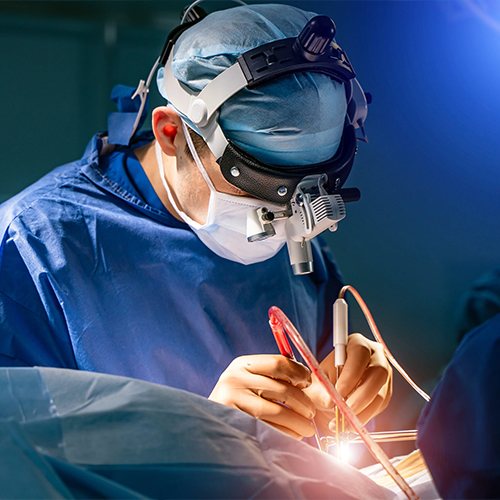
Neurosurgery (Brain and Nerve Surgery) Neurosurgery is commonly known in Turkish as “brain and nerve surgery”. The word combines neuron (nerve) and surgery. In fact, it is a medical speciality dealing with the surgical treatment of all components of the nervous system: the brain, brainstem, spine, spinal cord and peripheral nerves. Although the most accurate description is “brain, spinal cord and nerve surgery”, in everyday life it is simply known as “brain surgery”. Neurosurgery deals with the SURGICAL TREATMENT of: “tumours” arising within the brain, brainstem or spinal cord, or pressing on them from outside; “vascular diseases” affecting the vessels supplying the brain or spinal cord, such as aneurysms (ballooning of a vessel), arteriovenous malformations (AVM) and cavernomas; “congenital conditions” that develop as the nervous system forms and are present at birth, such as meningocele, meningomyelocele, tethered cord and split cord syndrome; “hydrocephalus”, which, in short, is characterised by an increase in fluid in the brain’s cavities that compresses the brain from within; “all kinds of spinal and spinal cord diseases”, particularly lumbar and cervical disc herniations, slipped vertebrae (spondylolisthesis) and narrowing of the spinal canal (spinal stenosis); “pituitary tumours” that cause hormonal disorders; all kinds of head and spinal cord “injuries” (road accidents, falls from a height, gunshot wounds, etc.); “all kinds of injuries to the peripheral nerves” that move our arms, hands, legs and feet; “entrapment neuropathies”, characterised by nerve damage caused by compression of peripheral nerves at certain anatomical sites, such as carpal tunnel syndrome (CTS), ulnar, peroneal and tarsal tunnel entrapment neuropathies; and “brain haemorrhages” caused by trauma, tumours, high blood pressure and other conditions.