
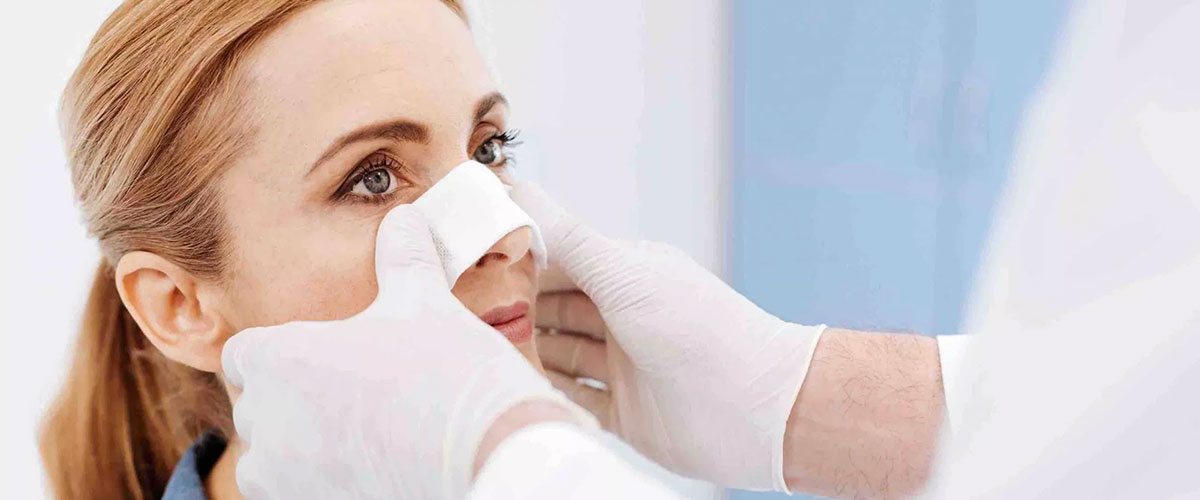
Rhinoplasty (Nose Surgery)
Nose surgery is considered because of health problems or aesthetic concerns. Health problems can be divided into two groups.
1. Structural problems of the nose
Structural problems prevent a person from breathing properly, and the nose loses its ability to perform this function. These problems can significantly affect quality of life. They may be genetic, or they may result from the narrowing or blockage of the airways due to causes such as a previous injury.
2. Shape deformities of the nose
Shape deformities of the nose may likewise be genetic, or they may develop later as a result of a blow, a fall or similar injuries, burns or various diseases. Such deformities can also cause psychological problems. Rhinoplasty can partly or completely resolve these problems.
Nose surgery for aesthetic reasons
People who want rhinoplasty for aesthetic reasons usually ask for a nose shape they feel does not suit their face to be changed to the shape they want. Although the patient’s wishes are taken into account before surgery, the surgeon’s experience and medical knowledge should be the main factor in choosing the right shape. Taking the patient’s views into account, the surgeon will make a choice that is both aesthetically pleasing and surgically sound.
People who want to physically resemble celebrities often seek cosmetic surgery and bring these people as a reference. As the nose is one of the most important features of facial aesthetics, such requests are very common in nose surgery. The surgeon’s role in these cases is to determine whether the patient really needs the procedure and, if necessary, to dissuade them from it. Rhinoplasty is performed only when there is a genuine issue that affects the person’s appearance or prevents them from feeling good about themselves.
The shape of the nose is chosen after measurements, based on proportions determined by the structure of the face. Although the nose sits right in the middle of the face, it is actually a feature that should not draw attention. When we talk face to face, we communicate by looking at the other person’s eyes and lips, not their nose. This shows that the nose should have a shape that does not draw attention. For this reason, the aim of rhinoplasty is to achieve a natural-looking result that suits the face.
Who Can Have Rhinoplasty?
Rhinoplasty can be performed once a person has finished growing. The nose must have reached its final shape, so growth must be complete. The psychological aspect of this development is also assessed by specialist, experienced doctors.
What Is Revision Rhinoplasty?
Revision rhinoplasty is a repeat nose operation performed on people who have previously had rhinoplasty and are not satisfied with the result, after they have discussed it with their surgeon and the surgeon considers it appropriate. Because the nose has already been operated on, revision surgery is more difficult than a first-time nose operation.
What Is Septoplasty (Deviated Septum Surgery)?
A deviated or crooked nose can take two forms. One type affects only the structures inside the nose. Another type affects structures both inside and outside the nose and makes the nose look crooked from the outside. These types of deviation can block the airway, although a deviated nose does not always cause breathing problems. Not getting enough oxygen means the organs are not adequately supplied. This condition, which also affects sleep, prevents proper rest and reduces quality of life. After an examination, and taking into account the severity of the patient’s symptoms, it is possible to correct both the internal and external deviation to achieve better breathing and an aesthetic appearance.
What Should I Pay Attention to Before Rhinoplasty?
Some medications need to be restricted before surgery. In addition, the rules that apply to all operations under general anaesthesia also apply here. These rules will be explained to the patient by the specialist doctor and healthcare staff.
How Is Rhinoplasty Performed?
Rhinoplasty is performed under general anaesthesia. It must be carried out in an operating theatre in a properly equipped hospital. The operation is performed using a closed or open technique and takes between 1 and 3 hours.
After Rhinoplasty
The patient stays in hospital for one night as a precaution. In some cases, temporary bruising and swelling occur after nose surgery, but these disappear after a certain period. If nasal packing has been used, it is removed after 2–4 days. The splints placed on the nose are removed on days 6–8, when the bone is thought to have partly healed. If open rhinoplasty is performed, healing leaves a barely noticeable scar.
During the first few days, very slight discharge and mild congestion are possible. During the first month, swelling inside the nose caused by post-operative oedema may slightly affect breathing. This swelling is treated with medication recommended by your doctor.
The time needed before returning to work depends on the surgical technique, the procedures performed, the patient’s healing capacity, their job and their environment. Patients with desk jobs can return to work on the fourth day if they do not mind the appearance of the nasal splint. For people with very active jobs, returning to work after 7–10 days is recommended.
Smoking has a negative effect on healing. Certain external factors should also be taken into account during recovery. The nose should be protected from sunlight for 3 months. Because closed surgery involves no external incision, no extra sun protection is needed; however, it should be remembered that protecting the skin from the sun is always important to prevent premature ageing. Swimming, running and similar activities are restricted for certain periods depending on the procedures and technique used. It is recommended that you ask your doctor for specific advice about wearing contact lenses and glasses.
Full recovery after nose surgery takes 3–6 months.