
Teeth Whitening
Healthy, white teeth are very important for an attractive and confident smile. However, teeth can become discoloured for a number of reasons, including structural defects, antibiotics taken in childhood or during pregnancy, food and drink, the amount of fluoride in drinking water, old dentures, crowns and fillings, and ageing. Teeth whitening is a procedure that lightens enamel that has become discoloured or yellowed for various reasons by several shades, tailored to the individual, and removes staining. Everything we eat and drink that contains colourants gradually darkens the surface of our teeth. Instead of fitting porcelain crowns on teeth that have darkened or yellowed in this way, a lasting whitening method known as bleaching can be used. Depending on the condition of your teeth, this procedure can lighten them by up to 8–10 shades. Teeth whitening involves applying a specially prepared gel to the teeth and accelerating its effect with a light source or laser. There are generally two types of tooth discolouration: intrinsic and extrinsic. Intrinsic discolouration consists of stains that penetrate the tooth and cannot be removed by brushing. Extrinsic discolouration is staining that sticks to the tooth surface from smoking and from staining foods and drinks such as cola and coffee. Teeth whitening, or bleaching, achieves very good results for both types of discolouration.
How is teeth whitening performed?
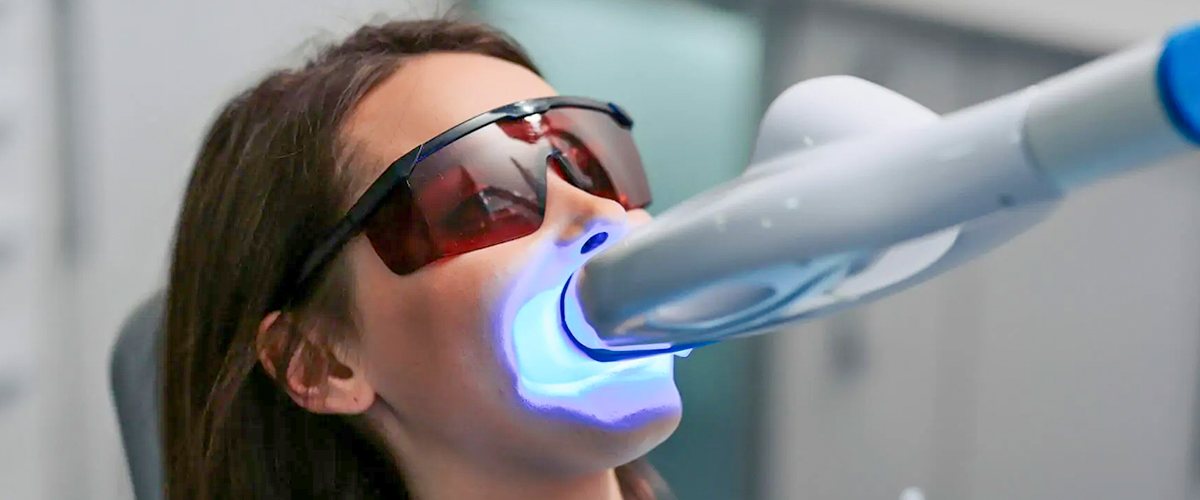
Teeth whitening should be carried out under the supervision of a dentist. The whitening gel applied to the outer surface of the discoloured teeth reacts with a special light. This allows the teeth to whiten quickly and effectively. With this method, teeth are lightened by an average of 3–4 shades in a single session.
Can everyone have teeth whitening?
Teeth whitening is a very safe procedure that is suitable for most people. When carried out at a reputable clinic under a dentist’s supervision, it does not cause harm. Whitening is not recommended for people who are still growing, and it should be performed with caution in pregnant and breastfeeding women.
What should I be aware of with teeth whitening?
Mild sensitivity may occur during or after teeth whitening, but it will pass within 1 to 3 days. What matters is that every step required for the whitening procedure is followed in full. When carried out by professional teams, the procedure does no harm.
How long does it take for my teeth to reach maximum whiteness?
The results of teeth whitening vary from person to person. Some teeth whiten within a few days, while others take a month or two. On average, however, teeth whiten within 2 to 3 weeks. If your teeth are more yellow than grey, whitening will be much more effective. Greyish discolouration caused by antibiotic use is harder to whiten, and it will take a little longer to achieve results in this case.
What can I expect during teeth whitening treatment?
Because the teeth continue to whiten for 2 weeks after the procedure, you should avoid staining foods and drinks during this period. After that, you may want to cut down on them as much as possible. Any sensitivity to hot and cold experienced during treatment will subside once the treatment is complete.