
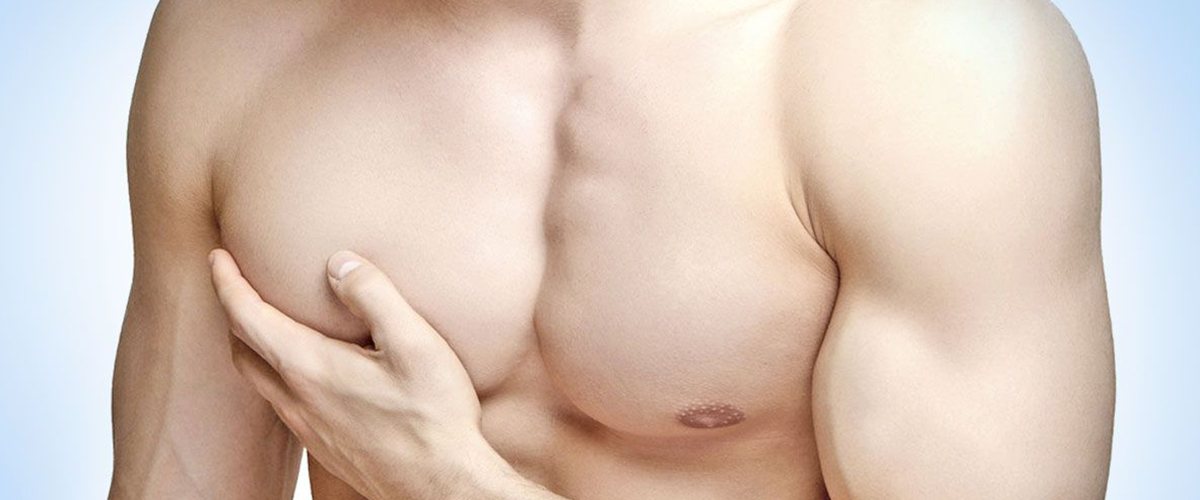
Gynaecomastia
Gynaecomastia can be defined as female-type breast enlargement in men caused by factors such as genetic problems, hormonal disorders, liver disease, cirrhosis, cancer, alcohol dependence, long-term medication use and excess weight. It may be caused by an abnormal increase in fat or breast tissue in the chest area, or by an increase in both.
Temporary gynaecomastia can occur in boys during puberty. As the name suggests, this is very likely to be temporary; the excess breast tissue usually disappears on its own by the age of 17–18 without the need for surgery. If gynaecomastia persists into adulthood, surgery is required. Gynaecomastia surgery can be defined as the removal of excess tissue in the breast area, which creates a distressing appearance and lowers men’s self-confidence and motivation, using liposuction or surgical excision. Gynaecomastia cannot be corrected through exercise or diet. With gynaecomastia surgery, men can safely, comfortably and, most importantly, healthily achieve a well-proportioned body that they no longer feel the need to hide.
How is gynaecomastia surgery performed?
The plastic surgeon first carries out a consultation and decides which method to use based on the nature of the breast enlargement. Performed in an operating theatre under general anaesthesia, gynaecomastia surgery takes about 1–2 hours. When the gynaecomastia is caused by fat tissue, liposuction is used. In this technique, the fat is broken down and liquefied with ultrasonic sound waves and then removed from the body by suction. To remove the liquefied fat, an incision of 3–4 millimetres is made in the treatment area and suction is performed using a cannula (a thin tube). Because the incisions made for the cannulas are only a few millimetres long, no visible scar remains on the skin afterwards.
When gynaecomastia is caused by both fat and breast tissue, a surgical method is used. In this method, the incision is made in a half-moon shape along the border between the areola and the surrounding skin, so the scar can be completely concealed. In addition to fat and breast tissue, excess skin can also be removed. Performed with an aesthetic approach using modern technology, gynaecomastia surgery is carried out in a way that leaves no noticeable scar and is not visible from the outside. The patient is discharged on the same day or the day after surgery. If their job does not involve physical exertion, they can comfortably return to daily life after 3–4 days.
What should I pay attention to after gynaecomastia surgery?
Very mild pain may be felt for the first few days after gynaecomastia surgery. Painkillers help make this period more comfortable. To achieve the intended shape, the chest area is firmly bandaged after the operation. You can shower two days after surgery, once the bandages have been removed.
One week after gynaecomastia surgery, there is no harm in doing sports such as swimming, running, basketball or football, as long as they are not too strenuous. It is recommended to wait one month before starting strenuous sports such as bodybuilding, and to avoid heavy lifting for a month as well. Wearing a compression vest for one month after surgery is very important for the chest to settle into its final shape. A slight firmness may be felt in the chest for 3 months after the operation. After 6 months, once the body has taken its final shape, it will look as if you had never had surgery.
Can gynaecomastia come back?
Unless there is significant weight gain or alcohol dependence, gynaecomastia is not a problem that easily recurs.