
What Is Lazy Eye?
Lazy eye, known medically as amblyopia, is when one eye sees less well than the other. It occurs because the brain does not properly process the visual information coming from one eye, even though there is no structural problem with the eye itself. The condition usually begins in childhood and, if not diagnosed early, can lead to permanent loss of vision.
Causes of Lazy Eye
Lazy eye usually develops in childhood and can have several different underlying causes:
- Squint (Strabismus): One eye becomes dominant because the eyes are not aligned.
- Refractive Errors: A high degree of short-sightedness, long-sightedness or astigmatism in one eye.
- Conditions That Block Vision: Problems that obstruct the visual pathway, such as cataract or a drooping eyelid.
What Are the Symptoms?
Lazy eye often goes unnoticed in children, because they may not realise that one eye sees less well than the other. However, there are some signs to watch out for:
- Blurred Vision in One Eye: Particularly difficulty seeing distant objects.
- Eyes Pointing in Different Directions: A sign of squint.
- Poor Depth Perception: Difficulty perceiving in three dimensions.
- Headaches and Eye Strain: These can occur when the eyes work too hard.
- Seeing Better With One Eye Closed: You may notice your child closing one eye to look at things.
How Is Lazy Eye Diagnosed?
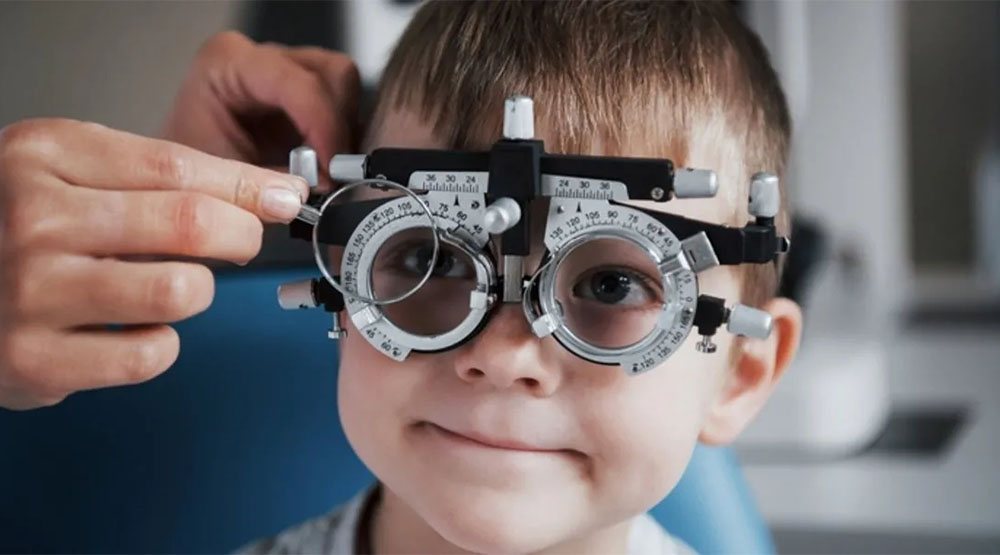
Lazy eye is usually diagnosed during routine eye checks. Early diagnosis improves the chances of successful treatment.
- Vision Tests: The vision of each eye is measured separately.
- Refraction Test: Carried out to find out whether glasses are needed.
- Eye Examination: Checks whether there is a structural problem in the eye.
Treatment Options
Lazy eye that is diagnosed early can usually be treated successfully. Common treatments include:
- Glasses or Contact Lenses: Suitable glasses are prescribed to correct refractive errors.
- Patching: The healthy eye is covered so that the lazy eye has to work harder.
- Vision Therapy: Special exercises strengthen the eye muscles and improve visual processing in the brain.
- Surgery: Structural problems such as cataract or a drooping eyelid are corrected surgically.
- Digital Applications: Special software and games are used for vision therapy.
Tips for Preventing Lazy Eye
- Routine Eye Checks: Have regular eye examinations, especially in childhood.
- Limit Screen Time: Avoid long periods of screen time that tire children’s eyes.
- Act Early: See an eye doctor as soon as you notice any symptoms.
- Balanced Diet: Eat foods rich in vitamin A, which supports eye health.
Conclusion
With early diagnosis and the right treatment, lazy eye can be fully corrected. Do not neglect your children’s eye health: keep up with regular check-ups to safeguard their vision for the future.